Home

Profound Autism? This is not autism.
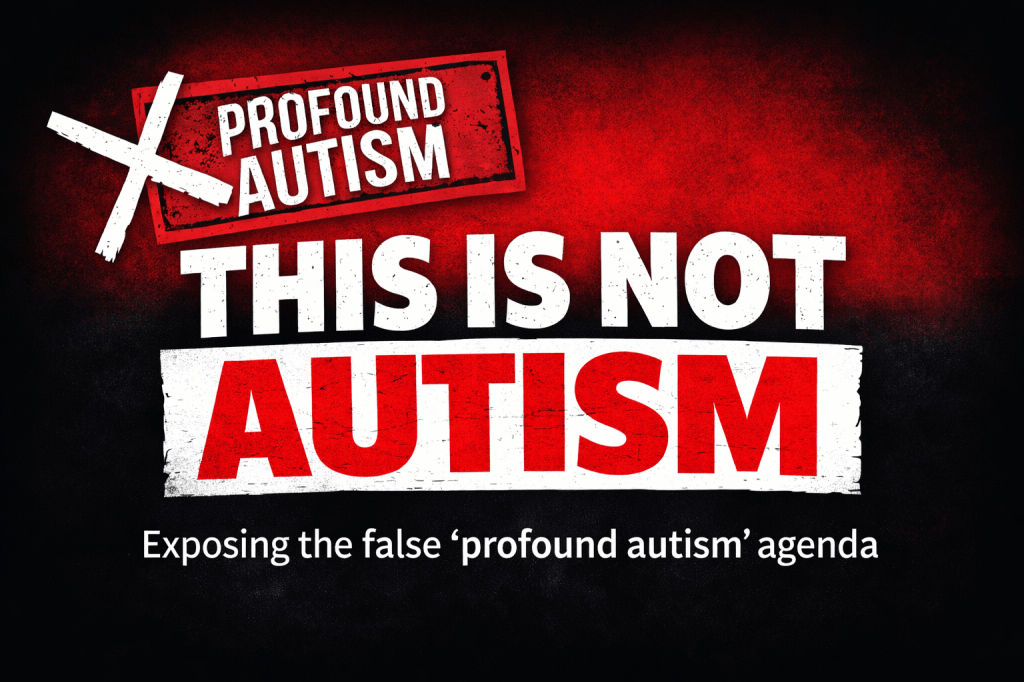
This Is Not Autism challenges the push to label autistic people as “profound,” an unsubstantiated classification that trades accommodation for presumed incompetence. We document how trauma and stress responses are misattributed to autism to legitimize segregated, behavior-first systems with lasting civil-rights consequences.


A carefully arranged cluster of neutral-colored index cards spread across a smooth, pale-gray tabletop, each card featuring a bold, simple keyword such as “Dignity,” “Rights,” “Inclusion,” and “Voice” in black, high-contrast type. A slim, metallic pen lies parallel to the table edge, and a closed, charcoal-gray tablet rests just beyond the cards. Soft studio lighting from above and slightly to the right creates subtle gradients and crisp yet gentle shadows, emphasizing the flat, tactile surfaces. Shot from a directly overhead, bird’s-eye perspective with plenty of negative space, the composition feels calm, methodical, and empowering, aligning with a professional, evidence-based advocacy tone in crisp photographic realism.

Trauma-Informed Support

Community Advocacy

Our library centers under-identified trauma and PTSD among autistic and DD/ID communities, offering open-access resources, action tools, and evidence-based reform guidance for a more just system.

Trauma Screening

We prioritize voices most often silenced and connect lived experience with research to inform policy, practice, and everyday inclusion.

A minimalist workspace featuring an open laptop on a clean, light-wood desk, its screen displaying a simple, monochrome dashboard of organized folders labeled “Resources,” “Research,” and “Action Tools.” Around the laptop sit a slim, gray notebook, a few neatly stacked white documents, and a pair of neutral-toned over-ear headphones resting flat. The background shows a softly blurred, uncluttered office wall in warm gray. Soft, diffused daylight from an unseen window illuminates the scene, creating gentle, professional shadows. Shot at eye level with a shallow depth of field, the composition is centered and balanced, conveying clarity, focus, and accessibility in a photographic realism style with a clean, corporate, mobile-first aesthetic.

Latest Posts

Contact Us

Please share your story to help influence policy and improve supports.

Your input shapes resources, guides, and trainings for autistic communities.

← Back

Thank you for your response. ✨

A tidy research corner with a stack of three hardcover books in muted gray and sand tones, their blank spines subtly embossed with abstract bar patterns instead of titles, resting beside a slim, silver tablet on a matte white table. A transparent acrylic stand holds a single sheet of paper printed with a simple, high-contrast chart of evenly spaced bars ascending in height, symbolizing progress. Gentle daylight filters in from the left, casting soft, elongated shadows and reflections on the acrylic. Captured at a slightly elevated, three-quarter angle with a moderate depth of field, the composition feels analytical yet hopeful, embodying evidence-based reform and quiet resilience in a clean, photographic, corporate aesthetic.

What People Say


Hope D.

“This site changed how I understand my own experiences and my path toward advocacy.”


Hope D.

“I finally found resources that respect my dignity and lived reality.”


Hope D.

“Trauma-informed perspectives guided my advocacy journey and strengthened my voice.”


Hope D.

“A needed voice in autism reform and inclusion.”

Organizing Team

Eventure is curated by a small team of designers, researchers, and ecologists who believe that technology must serve the planet — not the other way around. Working between Milan, Nairobi, and São Paulo, the team brings together local knowledge and global collaboration to shape a gathering rooted in care, creativity, and systems thinking.
We don’t just program talks — we curate experiences, relationships, and ideas that grow long after the event ends.